The Role of GIS and BIM in Enhancing Stormwater Drainage Quality Control in Nigeria
The Digital Shield: How GIS and BIM are Enhancing Stormwater Drainage Quality Control in Nigeria By John Cee Onwualu (FNSE, FNICE, FNIWE, P.E., R.ENG, MASCE)
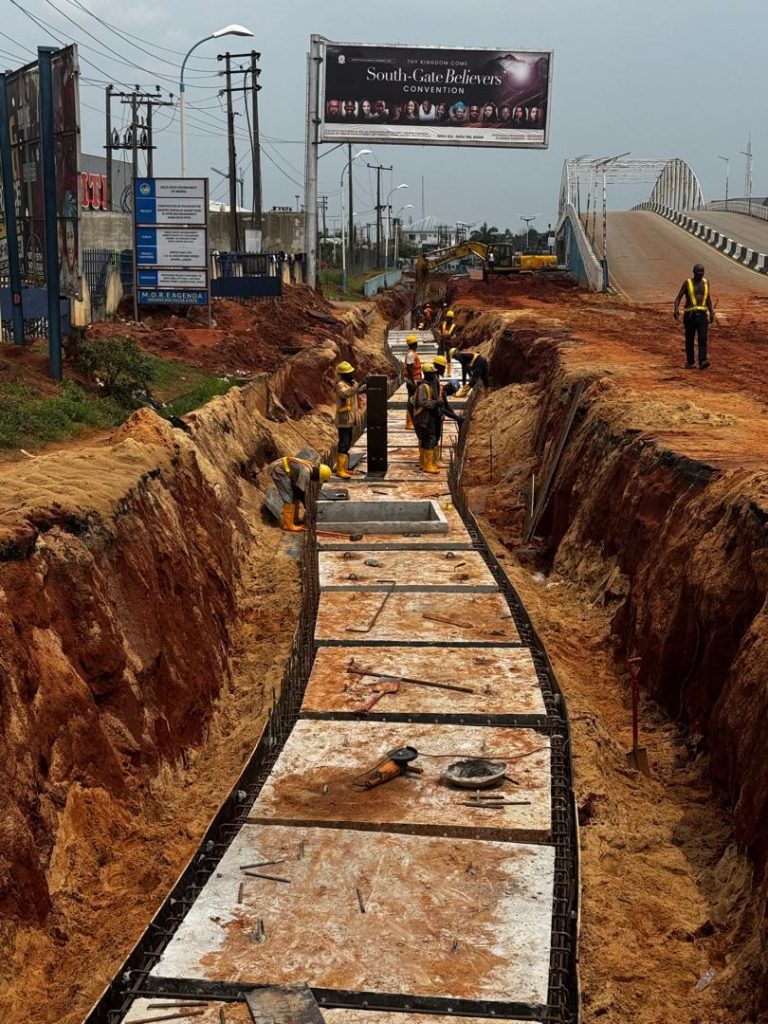
Nigeria, characterised by rapid urbanisation and intense seasonal rainfall, faces immense challenges in managing urban flooding. Cities like Port Harcourt, Lagos, and areas within Anambra State are constantly battling infrastructure limitations where legacy drainage systems struggle to cope with rising water volumes.
However, a technological revolution is underway in Nigerian infrastructure development. The integration of Geographic Information Systems (GIS) and Building Information Modelling (BIM) is transforming the field of civil engineering, moving quality control (QC) from reactive inspection to predictive, proactive assurance. This powerful synergy provides the necessary tools for precise spatial analysis, 3D simulation, and real-time monitoring, drastically improving the resilience and longevity of stormwater drainage systems across the nation.
1. The Context: Why Traditional QC Fails in Nigeria’s Floodplains
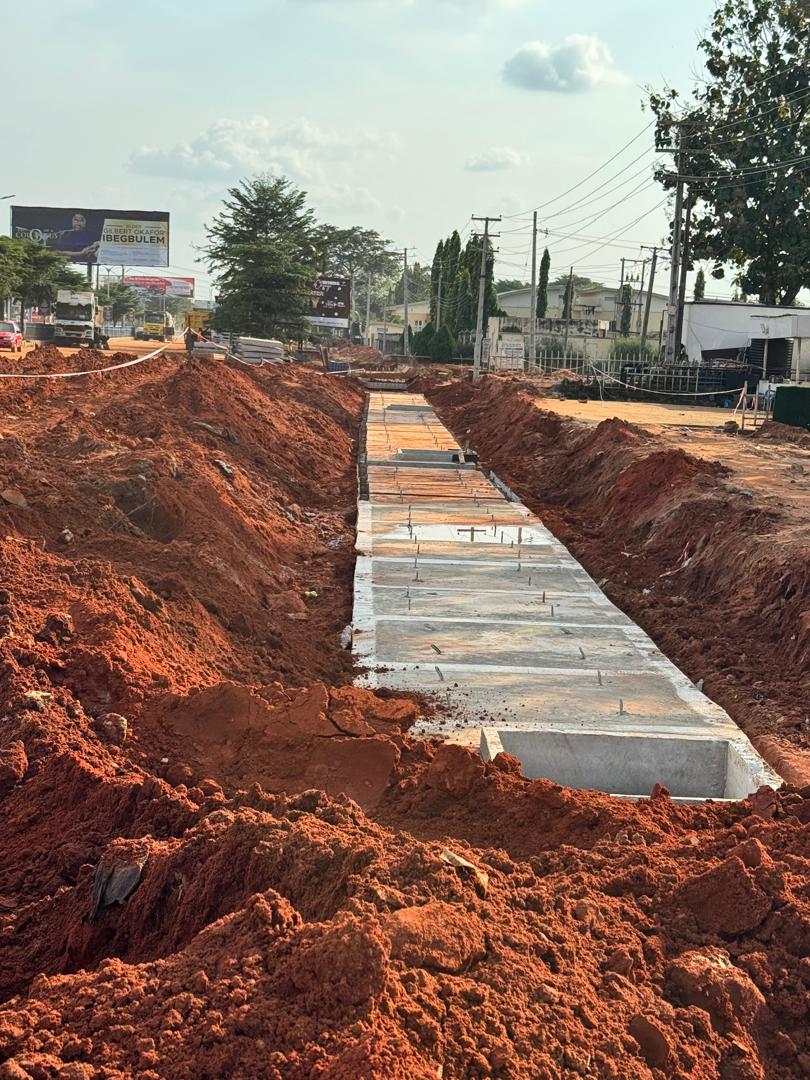
The traditional approach to stormwater management often relies on 2D plans and manual site inspections, methods that are prone to error, especially in complex, remote, or densely populated Nigerian urban areas. These methods often fail to accurately capture terrain variability, existing utility clashes, or the true hydraulic capacity of proposed systems.
The result is frequent system failure: pipe misalignments, undersized culverts, poor slope adherence, and the inevitable blockages and flooding that follow. GIS and BIM provide the essential data foundation to overcome these endemic issues, ensuring that designs are compliant, construction is accurate, and lifetime maintenance is data-driven.
2. GIS Core Applications: Mapping Runoff and Vulnerability
GIS is the foundational tool for understanding the spatial context of stormwater challenges. It answers the crucial question: Where does the water flow, and where are the systems most vulnerable?
GIS mapping of stormwater in Nigeria
GIS leverages high-resolution satellite imagery and advanced Digital Elevation Models (DEM) to map detailed terrain features. By creating precise topographic maps, engineers can accurately define catchment areas and visualise the entire water cycle, from rainfall input to discharge points. This level of initial precision is critical for placing drainage components optimally.
GIS drainage analysis tools
Using advanced spatial overlay analysis, GIS allows project teams to combine layers of critical data: rainfall intensity maps, existing land use/land cover (LU/LC), soil types, and existing infrastructure. This allows engineers to identify areas where impervious surfaces contribute heavily to runoff, guiding design choices towards areas requiring greater detention or infiltration capabilities.
GIS flood risk in Nigeria
One of the most immediate benefits of GIS in quality control is its ability to conduct comprehensive vulnerability indexing. By simulating various rainfall scenarios (e.g., 25-year, 50-year, or 100-year storms), GIS generates detailed flood risk maps, revealing exactly where floodwaters will pool or overflow. This intelligence guides optimal pipe, manhole, and inlet placement in Nigerian cities, ensuring that the critical components are situated where they can perform most effectively under stress.
GIS urban drainage models
Hydrological models integrated within the GIS environment (such as HEC-RAS or specific hydrological extensions) are used to model projected runoff volume and velocity. This ensures that the system design is based on scientific projections of water behaviour rather than generalised estimates, significantly enhancing the quality assurance of the initial planning phase.
GIS data stormwater quality
Beyond volume, GIS helps track potential pollutants. By mapping industrial areas, waste disposal sites, and population density alongside drainage paths, GIS can correlate spatial data with expected stormwater quality impacts, guiding the placement of treatment or infiltration features to meet environmental standards.
3. BIM Core Applications: Precision Design and Digital Twins
While GIS defines the location and environment, BIM focuses on the object—the precise design, assembly, and performance of the drainage infrastructure itself. BIM moves stormwater design from 2D lines and symbols into a collaborative, information-rich 3D environment.
BIM stormwater design models
BIM creates a Digital Twin—a comprehensive virtual replica of the proposed drainage system. This model specifies every component, from pipe material and diameter to the exact location and type of grate inlets. This level of detail ensures that designs strictly adhere to project specifications and local construction codes, minimising interpretation errors on site.
BIM drainage pipe modelling
Within the BIM environment, engineers meticulously model the entire pipe network, including complex connections and junctions. This process incorporates critical data fields such as exact pipe slope, material specifications, required concrete casing, and structural reinforcement details. Quality assurance is built-in, as the model dictates dimensionally correct elements.
BIM quality checks drainage
One of BIM’s most powerful QC features is automated clash detection. Before a shovel hits the ground, the BIM model identifies all potential conflicts between the new drainage system and existing underground utilities (water lines, electrical conduits, sewer systems). In cluttered urban environments like Lagos, catching these clashes virtually saves millions in rework and delays.
BIM 3D stormwater simulation
BIM tools facilitate the integration of specialised simulation software, such as the EPA Stormwater Management Model (SWMM). This allows engineers to conduct 3D hydraulic simulation within the digital twin, verifying that the specified pipe diameters, slopes, and detention ponds have the necessary capacity to handle calculated runoff volumes for prescribed storm events (e.g., 2-100-year storms). This simulation capability provides objective quality evidence of design robustness.
BIM integration drainage Nigeria
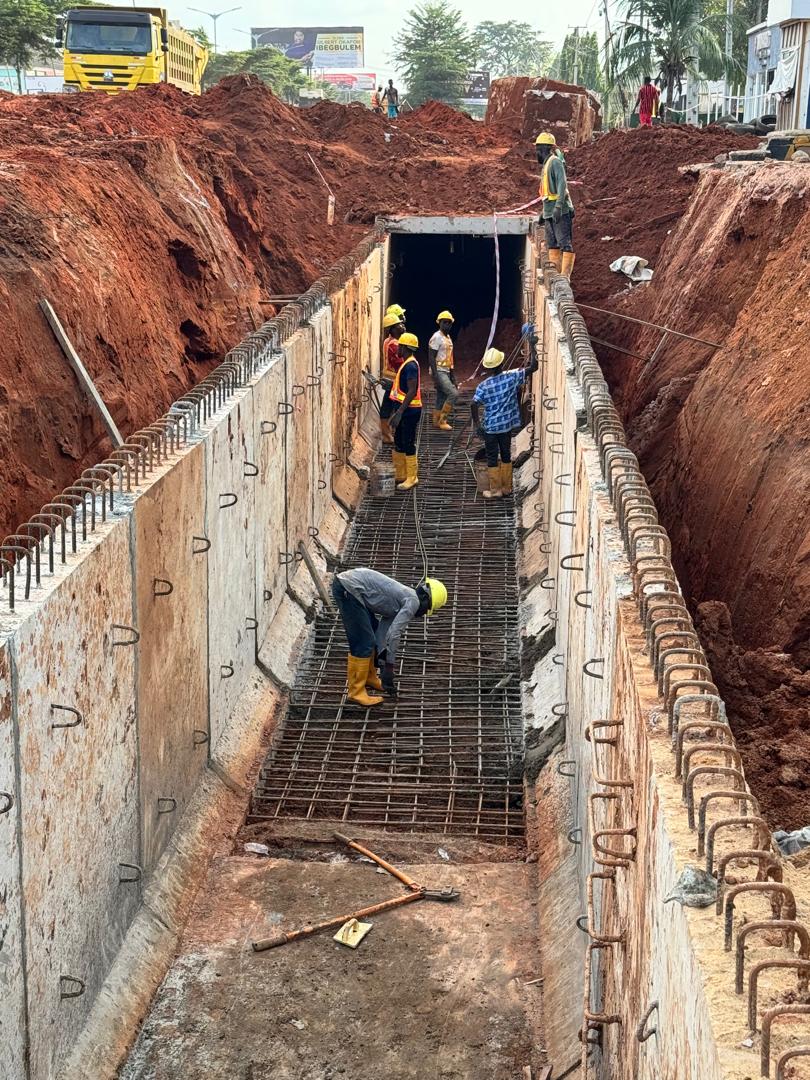
For contractors in Nigeria, utilising BIM ensures that the fabrication and assembly of pre-cast drainage elements (like box culverts or manhole sections) are executed with millimetre precision, guaranteeing easy and effective assembly on-site, a critical step in maintaining structural integrity and flow efficiency.
4. The Power of Integration: GIS and BIM Data Fusion for Quality Assurance
The true force multiplier for quality control is the seamless integration of GIS and BIM, often referred to as ‘GeoBIM.’ This fusion bridges the gap between site context (GIS) and infrastructure detail (BIM), providing a holistic view of the project.
GIS BIM combined stormwater
The GeoBIM workflow begins by transferring the precise GIS spatial data (terrain, boundaries, flood zones) directly into the BIM modelling environment. This grounds the BIM design in real-world constraints from the start. Conversely, the detailed, geometric BIM model data is exported back into GIS for broader asset management and visualisation.
GIS BIM data fusion in Nigeria
This integration produces comprehensive as-built models that are spatially accurate and dimensionally compliant. For major Nigerian infrastructure projects, this minimises redesigns and overruns by ensuring that the constructed system aligns perfectly with both the engineering standards and the geographic reality defined by Nigeria’s urban master plans.
Integrating GIS BIM drainage
The combined data supports 4D (scheduling) and 5D (cost) modelling—critical quality assurance steps. By linking the construction schedule and budget directly to the 3D drainage components, project managers can track progress dynamically. This is particularly useful for remote monitoring, reducing errors in sites far from urban centres and optimising the use of scarce resources amid Nigeria’s infrastructure challenges.
| Aspect | GIS Role | BIM Role | Combined Benefit |
|---|---|---|---|
| Planning | Runoff mapping, vulnerability indexing (location) | 3D hydraulic simulation (dimension) | Optimised designs, flood-resilient layouts |
| Monitoring | Spatial data overlays, real-time sensors (context) | Digital Twin updates (model integrity) | Clash detection, as-built accuracy, 4D/5D tracking |
| Analysis | Terrain/runoff correlation (environmental factors) | Flow/peak discharge modelling (system performance) | Predictive maintenance, cost savings, and failure mitigation |
5. Enhancing Quality Control Across the Project Life Cycle
The implementation of GIS and BIM enhances quality control at every stage of a stormwater drainage project.
A. Project Planning & Design Quality
QC begins with validating the conceptual design against performance requirements. BIM’s simulation capabilities verify design capacities for specific storm events. If the simulated flow exceeds pipe capacity, the model flags the element for redesign instantly. This preemptive QC ensures that the fundamental design is robust and compliant with the national drainage quality standards in Nigeria.
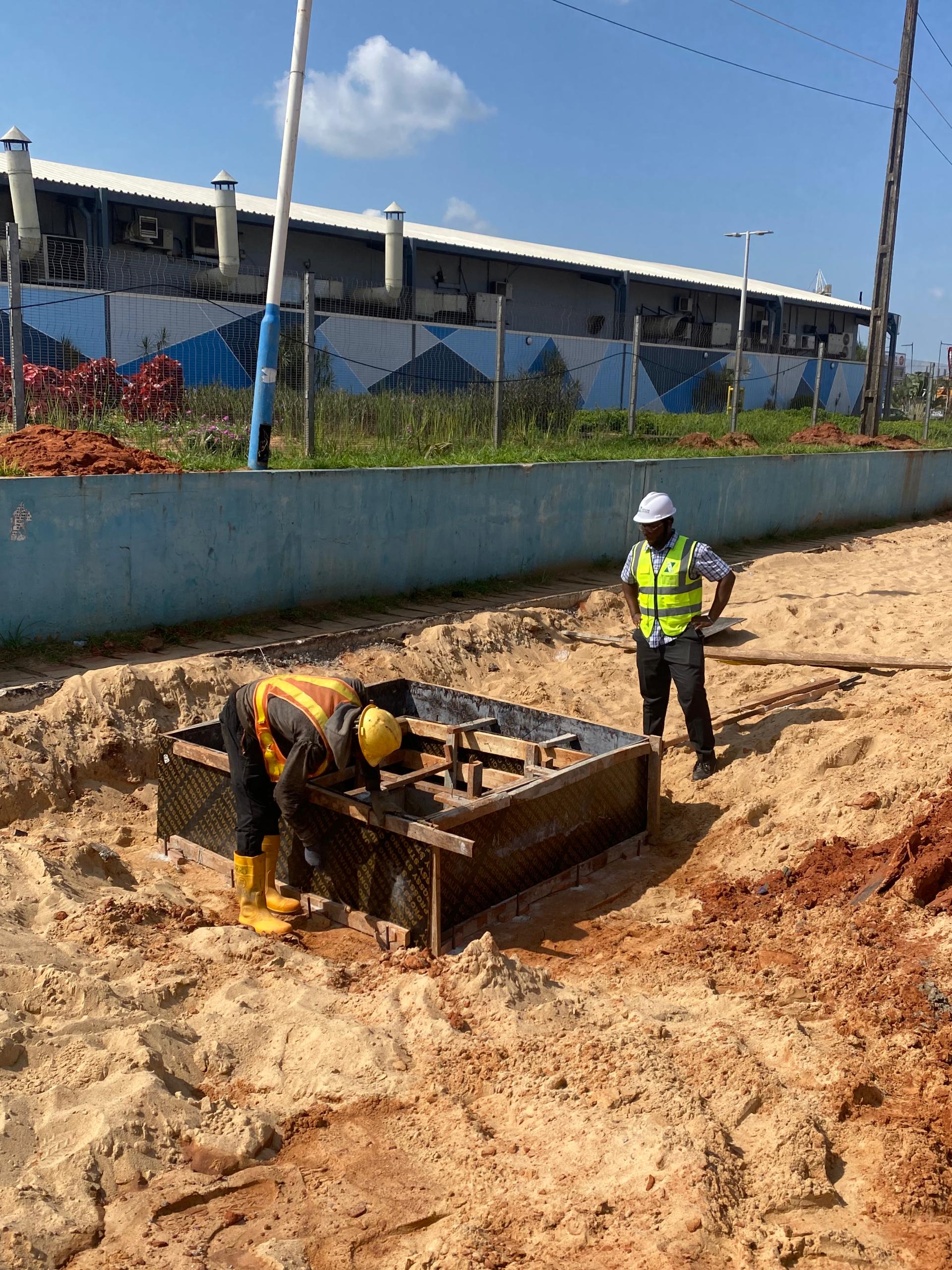
B. Construction Monitoring & As-Built Verification
During construction, the GeoBIM model acts as the definitive source of truth.
- Drone and Laser Scanning: Drone imagery and laser scans capture the physical progress on site. This data is overlaid onto the BIM model, instantly detecting misalignments, incorrect slopes, or deviations from specified depths for drainage components.
- IoT Integration: IoT-linked sensors placed on construction equipment or concrete pours can feed real-time data on placement and cure times back into the BIM/GIS tracking system.
- Remote Audits: This integration allows for remote monitoring, which is invaluable for geographically dispersed projects, ensuring quality assurance of drainage systems even when supervision resources are limited.
C. Post-Construction Maintenance & Predictive Analysis
The operational phase is where the long-term quality of the system is truly tested.
- Stormwater quality monitoring GIS: Post-construction, GIS analyses real-time data streams from flow meters, water quality probes, and sensors monitoring water levels. This data is correlated spatially to identify exact sources of blockages, sedimentation, or infiltration.
- Predictive Maintenance: Instead of waiting for a pipe to fail, the integrated system uses machine learning algorithms on historical sensor data to predict potential blockages or capacity reduction in systems (like those managing runoff in Eko Atlantic). This model facilitates targeted maintenance, reducing the massive costs associated with catastrophic failures.
- Pollutant control stormwater BIM: The BIM model defines the exact location and specifications of pollutant removal features (e.g., oil-water separators, sediment traps). GIS monitors the effectiveness of these features based on water quality data, allowing maintenance teams to optimise cleaning schedules and improve stormwater runoff treatment GIS effectiveness.
6. Addressing Nigeria-Specific Challenges
The adoption of GIS and BIM is not merely academic; it offers direct solutions to the unique infrastructure challenges facing Nigerian cities.
Nigeria urban flooding GIS
In densely packed cities like Lagos, where the delineation between formal and informal settlements is blurred, GIS provides the precise mapping required for effective project staging. It helps navigate complex rights-of-way, aiding in land acquisition processes and minimising disruption to existing communities while planning new drainage infrastructure.
Flood control projects in Nigeria BIM
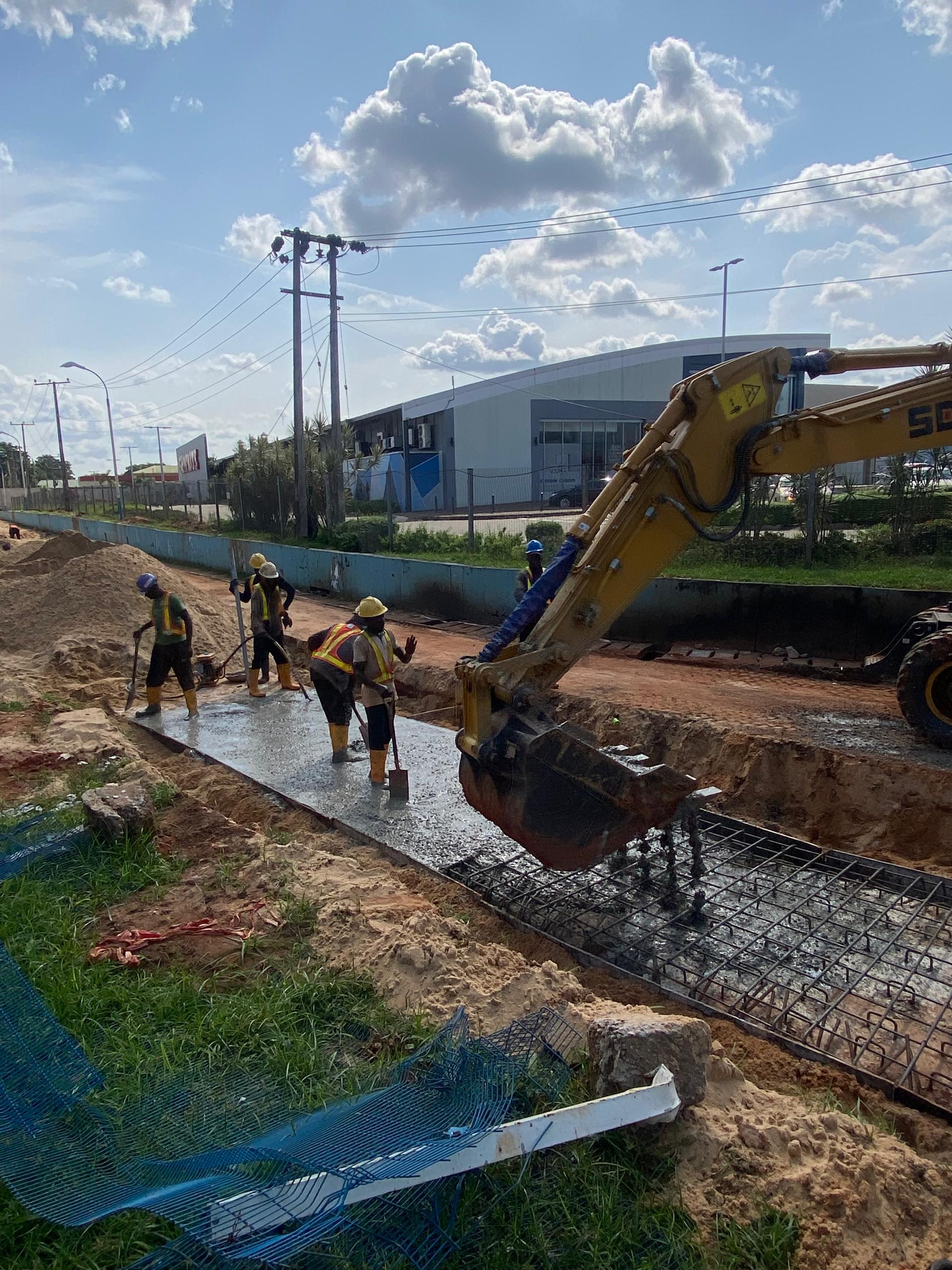
Large-scale initiatives, such as new infrastructure developments or massive flood control projects in Nigerian cities, require high degrees of coordination. BIM ensures that all trades—civil, structural, mechanical, and geotechnical—are working from a single, accurate, coordinated model, reducing the costly change orders typically seen in massive Nigerian construction projects.
Nigeria drainage policy GIS
For governmental agencies, GIS serves as a powerful compliance and auditing tool. By centralising all drainage assets into a spatial database, officials can easily audit system capacities, maintenance records, and operational status against mandated Nigerian drainage policy. This transparency is crucial for accountability and future policy-making.
Benefits of GIS stormwater in Nigeria
The immediate benefits of using these technologies include substantial cost savings (estimated at 10-20% due to reduced rework), faster project delivery, and, most importantly, measurable reductions in flood risk for millions of urban residents. The precision offered by BIM and GIS is the foundation for resilient infrastructure, offering a significant return on investment.
Conclusion: Securing the Future of Nigerian Infrastructure
The challenge of robust stormwater management in Nigeria requires tools that move beyond conjecture and generalisation. GIS and BIM provide the essential framework for a superior quality control process across the entire life cycle of drainage projects.
By enabling precise spatial planning, meticulous 3D simulation, and continuous, data-driven monitoring, these technologies ensure that critical infrastructure—from the sprawling networks of Lagos to the vulnerable floodplains of Anambra—is designed and built to withstand the realities of Nigeria’s climate. Improving drainage with GIS BIM is not just an efficiency gain; it is a vital step toward creating sustainable, resilient, and safe Nigerian cities, translating technological innovation directly into improved public welfare and economic stability.
References
1. (https://zienjournals.com/index.php/zjssh/article/view/807)
2. (http://skydomedesigns.com/bim-led-hospital-site-drainage-stormwater-management-checklists-for-bhubaneswar-2025/)
3. (https://journal.esrgroups.org/jes/article/view/3215)
4. (https://pinnacleinfotech.com/gis-bim/)
5. (https://pmc.ncbi.nlm.nih.gov/articles/PMC8479629/)
6. (https://pmworldlibrary.net/wp-content/uploads/2016/10/pmwj51-Oct2016-Olugboyega-BIM-based-projects-in-nigeria-featured-paper.pdf)
7. (https://gjeta.com/sites/default/files/GJETA-2024-0030.pdf)
8. (https://eadic.com/wp-content/uploads/folletos/mo_mbimcii_bim_management_for_civil_works.pdf)
9. (https://rsisinternational.org/journals/ijriss/Digital-Library/volume-9-issue-4/7061-7072.pdf)
10. (https://fjs.fudutsinma.edu.ng/index.php/fjs/article/view/2157)